

If you could choose only two skincare actives, many dermatologists would pick vitamin C and a retinoid. They complement each other well, but they are happiest at different times of day.
Morning: vitamin C
Vitamin C is an antioxidant. It helps neutralise the free radicals generated by UV and pollution, supports collagen production and helps fade the look of dark spots. That makes it a natural partner for daytime, applied before your sunscreen. Vitamin C is not a replacement for sunscreen, but research suggests the two work well together.
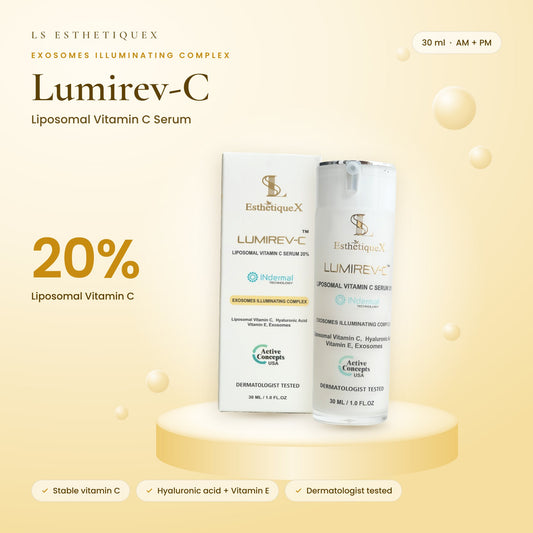
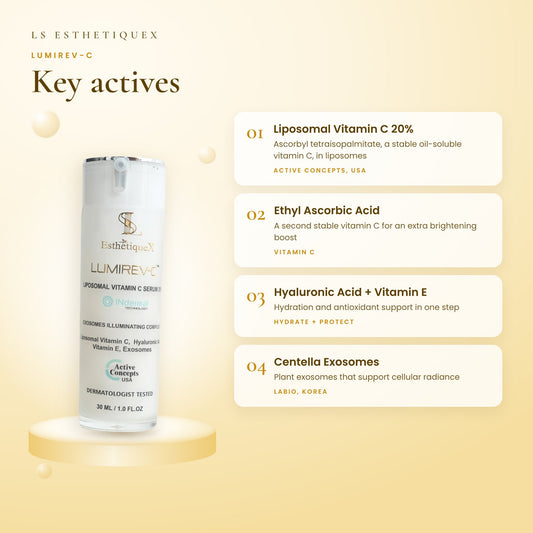
Lumirev-C uses 20% liposomal vitamin C in the form of ascorbyl tetraisopalmitate, a stable, oil-soluble vitamin C, plus ethyl ascorbic acid, hyaluronic acid and vitamin E.
How: after cleansing, apply a few drops to the face and neck, let it absorb, then moisturise and finish with SPF 30+.
Night: retinol
Retinoids encourage skin renewal, which over time helps soften fine lines and improve texture and tone. Retinol is best used at night because it is sensitive to light and can make skin more sun-sensitive.
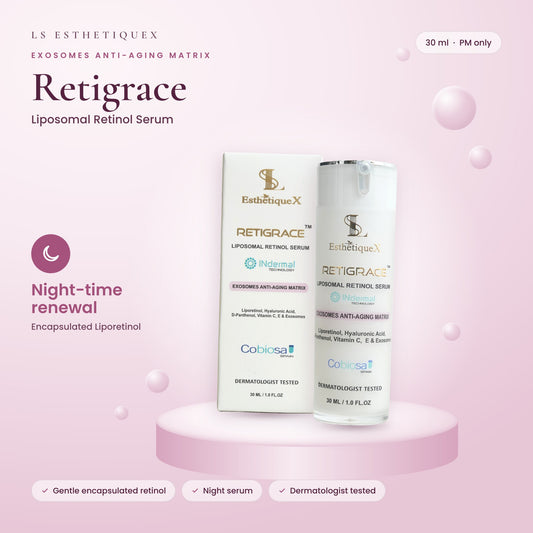
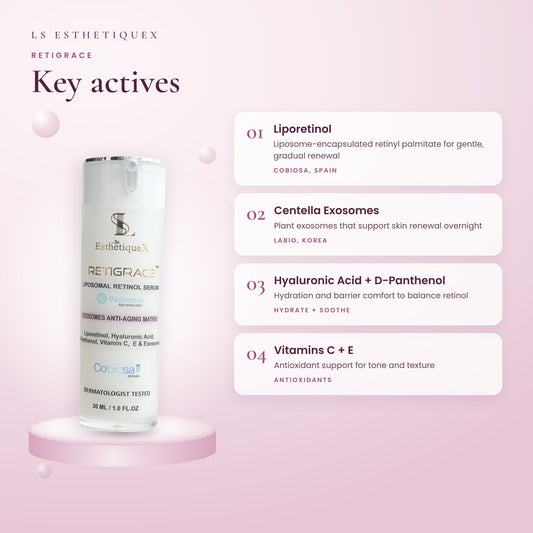
Retigrace is built on Liporetinol, a liposome-encapsulated retinyl palmitate from Cobiosa, Spain, alongside hyaluronic acid and D-panthenol to help counter dryness.
Starting retinol without the drama
- Go slow: start two or three nights a week for the first couple of weeks, then increase as your skin allows.
- Apply to dry skin: wait a few minutes after cleansing so it is less likely to sting.
- Moisturise: follow with a simple moisturiser, or apply moisturiser first if your skin is sensitive.
- Expect an adjustment period: mild dryness or flaking in the first weeks is common. Stinging, burning or persistent redness are signs to cut back.
- Don’t stack exfoliants: on retinol nights, skip scrubs and strong acids.
- Wear sunscreen daily: always, but especially when using retinol.
Where does Kojiscient fit?
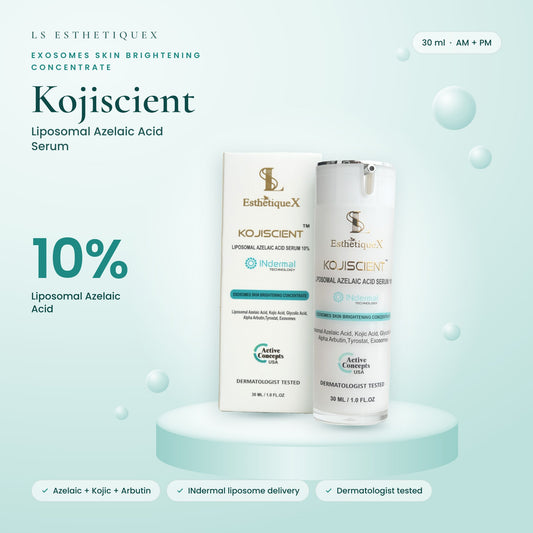
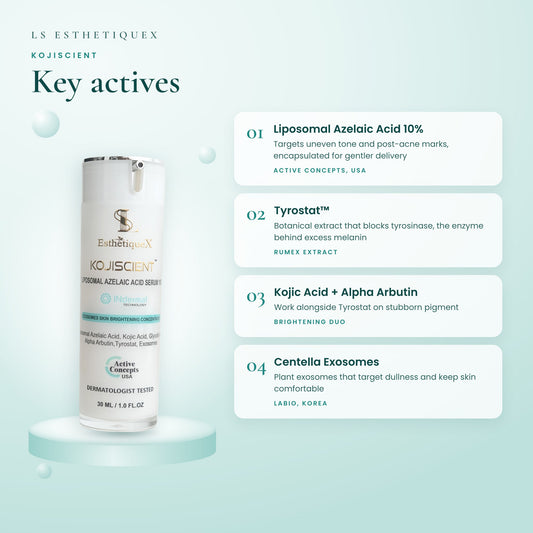
If pigmentation is your main concern, Kojiscient can be used morning and evening. When combining it with Retigrace, introduce one product at a time and consider using them on alternate nights to start, because Kojiscient also contains glycolic acid.
Who should avoid retinol?
Avoid retinol during pregnancy and breastfeeding unless your doctor advises otherwise. If you have eczema, rosacea or very reactive skin, talk to a dermatologist before starting.
Further reading
- Topical Vitamin C and the Skin: Mechanisms of Action and Clinical Applications (Journal of Clinical and Aesthetic Dermatology, 2017)
This article is for general information and is not a substitute for medical advice. If you have a skin condition, are pregnant or breastfeeding, or take regular medication, speak to a dermatologist or your doctor before starting new products.
